Lower Austria
Wallsee: the Danube village in the origins of the Prauchner family
A historical portrait of Wallsee-Sindelburg, between the Danube, the ancient Roman limes, Wallsee Castle and the memory of the Prauchner family.
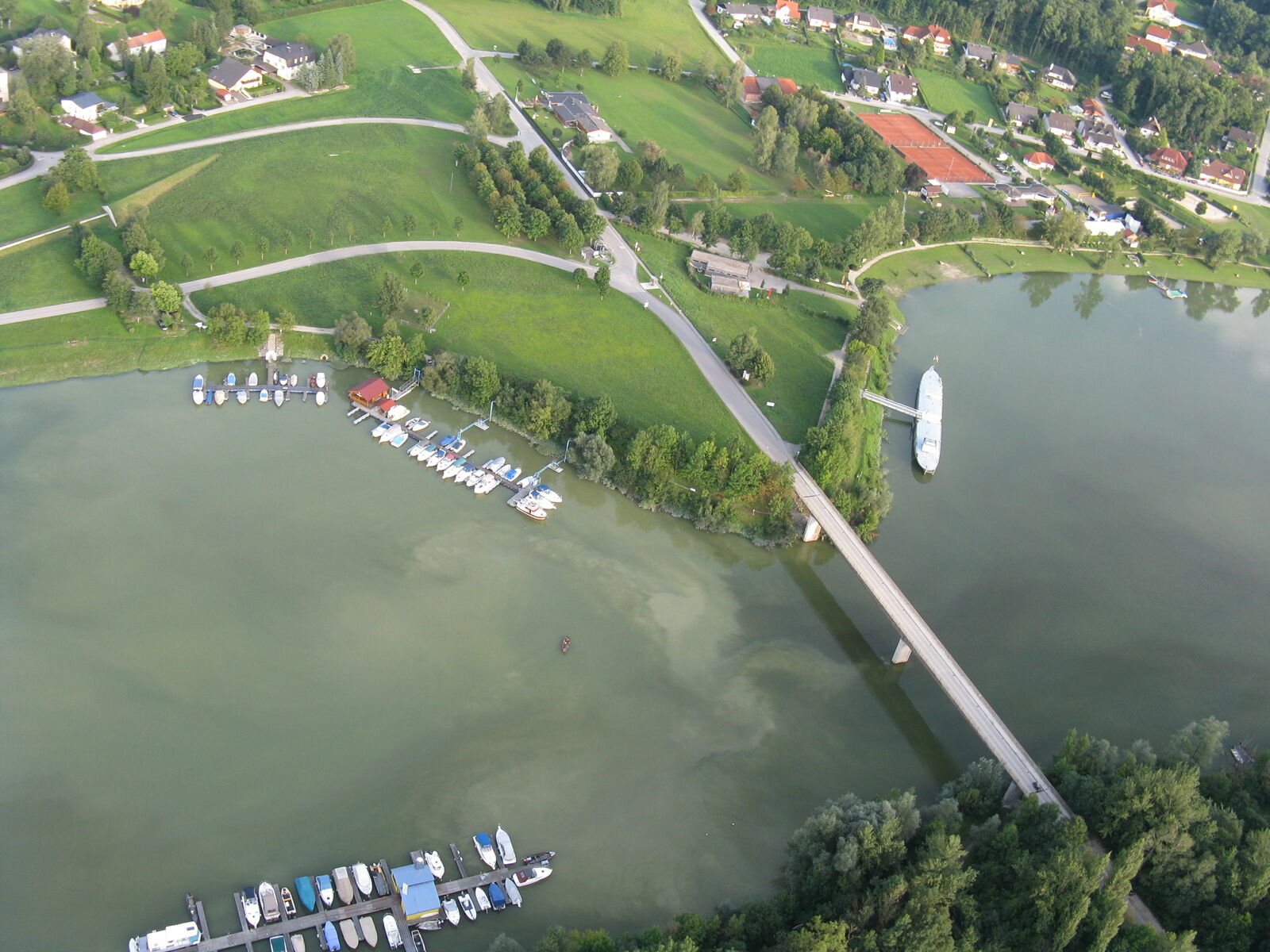
Wallsee-Sindelburg is a small municipality in Lower Austria, located in the district of Amstetten, on the banks of the Danube River. At first glance, it may appear to be just a quiet Austrian countryside village. Yet its geographical position reveals a much older history: Wallsee stands on an elevation beside the Danube, within a landscape that for centuries held military, commercial and symbolic importance for Central Europe.
For the Prauchner family, Wallsee is not merely a historical location. It is a reference point for the family’s origins. It was in this region, between Wallsee, Sindelburg and nearby localities, that early records connected to the Prauchner surname appear, before parts of the family migrated to other regions of the former Austro-Hungarian Empire and, later, to Brazil.
The Danube as a historical route
The Danube was one of Europe’s great natural routes. Rising in Germany’s Black Forest and flowing toward the Black Sea, it crosses or borders numerous European countries. For centuries, it served as a corridor for trade, communication, military movement and cultural exchange.
Wallsee developed within this very environment. The village was far from isolated: it formed part of a historical corridor linking Germanic territories with Alpine regions and with Hungarian and Balkan lands. Before the age of modern railways, the Danube was one of the principal means of connection between communities, markets and centres of power.
An ancient Roman frontier

The strategic importance of the region predates medieval Austria itself. During the Roman period, the Danube formed part of the northern frontier of the Roman Empire, known as the Danubian Limes. Along this frontier stood forts, camps and watch posts intended to protect the empire from incursions coming from the north.
Wallsee is associated with this ancient defensive system. The Roman presence helps explain why the area remained important in later centuries: its geography favoured visual control of the river and surrounding routes. Even after the fall of the Roman world, the strategic logic of the location endured.
Wallsee Castle

The village’s main historical landmark is Wallsee Castle, or Schloss Wallsee. According to the municipality’s official history, the present castle was built between 1368 and 1388 by Heinrich VI von Wallsee on a site associated with a former Roman encampment.
The noble House of Wallsee held considerable influence in medieval Austria. Like many fortresses of the period, the castle served simultaneously as a symbol of territorial power, an administrative centre and a control point along the Danube.
Over the centuries, the castle passed through different owners and evolved from a medieval stronghold into an aristocratic residence. From the nineteenth century onward, it became directly connected with the memory of the Habsburgs: it belonged to Archduchess Marie Valerie, daughter of Emperor Franz Joseph and Empress Elisabeth, better known as Sisi.
This detail links Wallsee to the imperial imagination of Austria. Though small, the village was not merely an ordinary rural settlement: its landscape was tied to aristocracy, the Danube and Austria’s political history.
Life in a Lower Austrian village
During the nineteenth century, Wallsee-Sindelburg preserved the typical characteristics of small rural communities in Lower Austria. Local life revolved around agriculture, the Catholic Church, parish registers, small properties and close community relationships.
This context is important for understanding the family records. In villages such as Wallsee and Sindelburg, baptism, marriage and death records were not merely religious formalities. They represented the principal means of documenting civil existence, family relations, legitimacy, origin and social position within the community.
For families such as the Prauchners, these records preserved traces across generations. They make it possible to connect Brazilian descendants with a specific Lower Austrian landscape of churches, fields, villages and roads that still exist today.
Wallsee and the memory of the Prauchner family
The relationship between the Prauchner family and Wallsee should therefore be understood not only as a geographical origin, but also as a social and cultural one. Wallsee represents the European environment that existed before emigration — shaped by small communities, Catholic traditions, parish records, manual labour, local ties and strong continuity between generations.
When parts of the family left the region and moved to other areas of the Austro-Hungarian Empire, they carried with them a heritage formed within this rural Austrian world. Later, with emigration to Brazil, this connection became physically more distant, yet it remained alive as a reference to their origins.
For this reason, Wallsee occupies a special place in the family’s history. It is not merely the setting of old records. It is the point where the documented memory of the Prauchners meets a concrete landscape: the Danube, the castle, the village, the church, the fields and the ancient Roman frontier.
A small place within a larger history
The history of Wallsee demonstrates how small localities may be connected to much broader historical processes. In a single place converge the Roman Empire, the medieval Austrian nobility, the Habsburgs, rural Lower Austria and the trajectory of families such as the Prauchners, whose descendants would eventually spread far beyond Europe.
For Brazilian descendants, discovering Wallsee means more than locating a place on a map. It means rediscovering the environment where an older branch of the family lived — before the great migrations, before crossing the Atlantic and before the formation of the Brazilian branch of the family.